





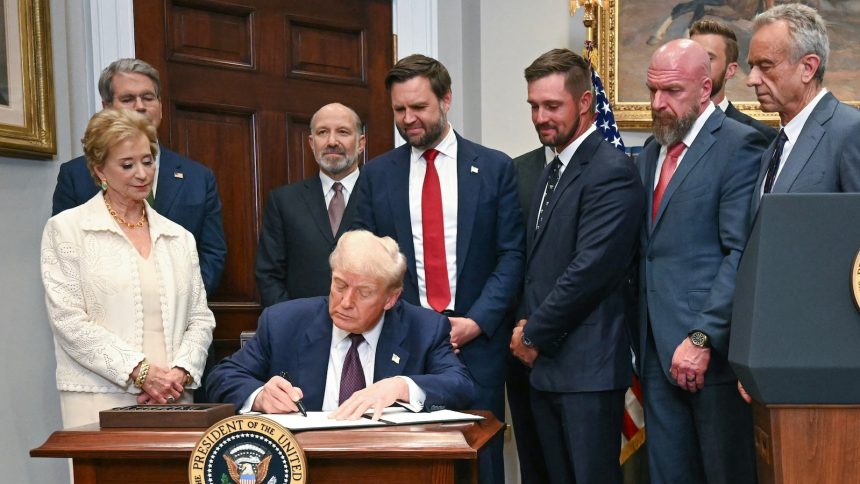
In a significant move for American schools, President Donald Trump has signed an executive order to bring back the Presidential Fitness Test, which was previously discontinued in 2012 during Barack Obama’s administration. The announcement was made on July 31, 2025, in the Roosevelt Room of the White House, where Trump stressed the importance of fitness among youth.
Trump expressed enthusiasm for the revival of the test, stating, “I’m pleased to announce that we’re officially restoring the Presidential Fitness Test and the Presidential Fitness Award. It’s going to be a very big thing.” He highlighted the test as a “wonderful tradition” and reaffirmed his commitment to reintroducing it to schools across the nation.
Originally established in 1956 under President Dwight Eisenhower, the Presidential Fitness Test was replaced by the Presidential Youth Fitness Program, which aimed to promote an active lifestyle among students. While the specific components of the revived test have yet to be detailed, the traditional elements often included a one-mile run, sit-ups, pull-ups or push-ups, sit-and-reach, and shuttle runs.
White House press secretary Karoline Leavitt commented on the initiative, saying, “President Trump wants to ensure America’s future generations are strong, healthy, and successful… creating a culture of strength and excellence for years to come.”
The executive order aligns with the administration’s broader efforts to establish pronounced fitness objectives for young Americans. During the signing ceremony, Trump was flanked by various athletes, including NFL kicker Harrison Butker and professional golfer Bryson DeChambeau, both of whom are supportive of the initiative.
DeChambeau remarked, “We have an opportunity in being [on] the 70th anniversary of the President’s Council on Sports, Fitness & Nutrition to literally change the fabric of kids’ lives. Our first initiative is to bring back and reignite the President’s Fitness Test.”
This initiative comes amidst ongoing discussions within the Trump administration surrounding sports policies, including a controversial ban on transgender athletes in women’s sports. Furthermore, the U.S. is gearing up to host several significant sporting events, such as the Ryder Cup, the FIFA World Cup in 2026, and the Summer Olympics in 2028.